
Today, Fairway Park Baptist Church marked 52 years of demonstrating God's person and work to the South Hayward community. May God be pleased to honor His name for another 52 years!
You can click the image for a larger version of the photo.

 "Missions is real. Missions is more than pictures displayed on a wall. Missions is about people making decisions that affect them for all eternity. I am here today because someone understood the reality of missions."
Truth today is seen as optional, random, and relative. Long-gone are the days of ‘situational ethics’; today’s culture is not even concerned with the ethics of the situation – only on personal ethics. “What does this mean to me?” is the question asked by many. It is the wrong question! Your interpretation of a matter is irrelevant. “What is TRUE?” in this situation is far more relevant and important than any personal reaction or interaction.
Society needs truths to progress. The absence of truth leads to anarchy, when all seek to “do what is right in their own eyes.” Societal anarchy is horrendous; but personal anarchy is seen far more frequently and is even more destructive. Years ago, it was said that the person who acts as their own lawyer has a fool for a client. A modern corollary might state: The person who acts as their own moral compass has a fool for a guide.
Truth is not elusive. Truth is unchanging. Truth is vital if your life is to be one of integrity. The great unchanging truths are found in the Bible, the written record of the One Who does not change! Notice what God’s Word says about truth and its application to life.
Consider the two forms by which truth can be presented: objective and subjective. Objective truth is that which does not change in any circumstance (a good example would be the orbit of the earth, from any vantage point, it always behaves the same). Subjective truth is that which is free from error in the given circumstance (a good example here would be gravity – on the earth it behaves in one manner, but in space or a different plant, quite another). Both of these aspects are found in Scripture.
What qualifies a statement, quality, character as “truth”? Truth is presented as that which is reliable, certain, provable, and settled. These are the non-negotiable aspects of life.
Truth is the bedrock upon which a life of integrity is built. Examine your life; upon what unchanging truths is it based? Do those truths align with the truths of God’s Word? His unchanging foundation must become the pattern and source of your life’s foundation. To do otherwise is not safe, right, true or stable.
Last time we discussed integrity, trust was a verb, this time we discuss it as a noun. We will refer to the noun aspect of trust as belief. Beliefs are what you know to be true intrinsically or by experience. How many times have you ordered a pizza from a national chain? You are able to get the same pizza in
We began with a discussion of how knowledge directs character which dictates action. Does action now precede character? No. If all you did was correct your actions, you would still not be a man of integrity. However, knowing what the actions of a man of integrity are to be, you will now discover the kind of life that will motivate such actions.
The Bible describes a man of trust as one who faithfully follows commands or fulfills their responsibilities. Such a one can be easily relied upon for greater tasks. This type of man is also described as one who has a firm belief in God and His Son as the only Savior of mankind. In the parable of the talents (Matthew 25:14 – 30), the faithful servants shouldered their responsibilities and executed their expected duties with very little accountability. Faithfulness, 1 Corinthians 4:2 tells us, is required in stewards – not an optional quality. Paul continues to instruct the Corinthian believers (1 Corinthians 10:13) by reminding them that in times of trial God demonstrates His faithfulness to us. In fact, God’s faithfulness is demonstrated (1 John 1:9) in terms of His forgiveness.
Last time, the confidence-inspiring activities of the man of integrity was discussed. The Bible uses words like ‘confidence’, ‘hope’, and ‘trust’ to define this individual’s character. This confidence is not produced by gold (Job 31:24) or national armament (Isaiah 36:4). Instead Genesis 1:10 uses a word translated elsewhere as “hope” to describe the gathering together of waters. Hope is a rallying point for those without hope. God Himself is the rallying point in Jeremiah 50:7. Earlier in his prophecy, Jeremiah (29:11) discusses the assured end [hope in some translations] and plan that God has for His people.
Jeremiah 29:11 is a crucial text as you consider this aspect of integrity. God has plans to bring you to ‘an expected end’. You can have confidence in His plan being accomplished in your life. At the same time, God is expecting you to live in a way that demonstrates the same type of expectancy to others. Are you proving yourself to be as reliable to others as God is to you? He calls you to mirror Him. Check your reflection and adjust yourself as needed.
Remember, this study of Integrity is based on the premise that integrity is comprised of faith, honor and discipline. Continuing the study of faith, attention is now turned to the role of trust in faith.
Trust is a large component of faith. Frequently, “trust” and “faith” are used interchangeably. There are some differences, however. Faith is often a confidence in that which is unseen, while trust often describes confidence in that which can be perceived by the senses.
Trust is crucial to the life of integrity. Rare indeed is the one who possesses integrity without inspiring trust. God’s Word has much to say about trust: how it is gained, how it is maintained, where it is rightly put, as well as where and how it can be lost or destroyed.
Trust is often described as that which can be supported, confirmed or verified. Genesis 15:6 implies that Abraham’s belief came through the confirmation of Sarah’s pregnancy. God spoke to Moses (Exodus 19:9), not for Moses’ benefit, but to confirm the relationship they shared to the Israelites satisfaction. In 1 Samuel 3:20, trust in Samuel was gained by his actions. Even God’s word produces trust in itself. Psalm 19:7 speaks of the verifiable aspect of Holy Scripture. The book of Proverbs (11:13) tells us that trustworthiness validates a man’s integrity. Jonah, the prophet to
Trust also inspires confidence. When a matter can be verified, a level of confidence is gained. The man of integrity must develop not only a character that can be verified, but also a character that inspires confidence. Scripture outlines this aspect of trust in various ways. Deuteronomy 28:52 speaks of the confidence inspired by city walls. Psalm 9:10 tells of the confidence inspired by God’s name. A person’s name reveals much about their character. How much confidence is inspired in others at the mention of your name? Psalm 44:6 reminds of the fleeting security found in weapons – not very confidence-inspiring. But Psalm 115:9, 10, 11 extol the merits of the LORD as the true source of all confidence. A friend’s hurtful yet helpful words are more confidence building than the traitorous flattery of an enemy, according to Proverbs 27:6. In fact, trust yourself is an indication of foolishness, says Proverbs 28:26. The apostle Paul, in Philippians 3:3, 4 tells in what he places confidence – and it wasn’t what everyone else would have chosen!
The confidence trust inspires is described as a shelter, a safe place for others to occupy. The man of integrity protects others by being a man of his word, one in whom they can trust. This is the security found in a rock (Deuteronomy 32:37), an armor-bearer (Psalm 18:30), as well as a tower and shield (Psalm 144:2).
The life of integrity is one of faith and trust. As you place your trust in the Lord and His plans for you, reliance on the flesh weakens. A man of integrity is one who inspires confidence, not because has all the answers or knows all the solutions; but because He has learned the proper place for trust. The man of integrity inspires others to trust him because he is trusting God.
What are you doing to inspire others’ trust in God? Their appreciation for your directing them to God is what builds your character of integrity.
Psalm 51 offers an unparalleled glimpse into the life of
David describes his process of repentance in the first 9 verses. This involved a detailed record of what had transpired. David did not confess generally, but very specifically. He then pleads for mercy to be the overriding principle in his correction. He requests a thorough clearing of his record, asking for his offenses to be expunged from the official records. He does this with a simple, yet profound acknowledgment of his guilt, a unvarnished representationof his depravity, and a heart-wrenching cry for some solution to be reached. Reading these verses one walks away with the picture that David is truly sick of his sin. One need look no further than verse 4, in which David states that his offense is only committed against God. Remember, at this point in the game, Uriah is dead, Bathsheba is pregnant, other wives and mothers are mourning the loss of their dead - and David states that God is the only offended party? How can he make such a claim? I would submit that David was addressing the heart of the issue. By denying God the right to govern his actions, David had begun traveling a path that could only lead to destruction. Sins against others do not break one's relationship with God; rather, one's broken relationship with God results in sinful actions towards others. Ponder that thought for a moment. You may try to excuse your actions toward others as shortcomings, lifestyle choices, character weaknesses, personality flaws, or social acceptability; but these attempts only serve to highlight the depth of one's depravity. Boil it all down, our sinful actions toward others are the results of our broken relationship with God. No wonder we must beg for His mercy and forgiveness!
But what hope is there that God will hear and act on your behalf? The hope lies in God Himself! He has promised those who confess that their sin will be forgiven (1 John 1:9). He has promised to remove our sins as far as the east is removed from the west. He has promised to remember them no more; to no longer use them as evidence against us. He has promised to lovingly correct those who are legitimately His children.
The outlook may be bleak with a good chance of increased gloominess at this point. Do not despair! There is hope, not in your ability to perform better or in your skill at mastering new concepts. The hope is found in God being exactly what He promised Himself to be: God, the Unchanging Holy One. Integrity is only forged on the anvil of His righteousness and perfection. Allow Him full discretion at how He molds and shapes your life. The process of building integrity has begun!
A Starting Point
Integrity. A multitude of concepts are wrapped up in this significant word. We use integrated circuits (at least we used to) to keep appliances working; without them it was just an odd-sized weight on the kitchen counter. People are described as an ‘integral part’ of a team – a key to their success. At the heart is the meaning ‘unbroken’ – a solidity that cannot be disintegrated, dissolved or dissuaded. The last thing in the world you would expect to find broken is something with integrity.
Unfortunately, that has been proven over and over to NOT be the case. Politicians, corporate executives, televangelists, lay workers and even pastors have been found in recent days to be anything but people of integrity. The easy road is too often taken, the foundations eroded, the principles crumbled, the sins hidden, the truth disfigured; and the destructive wake of shattered faith, ruined lives and broken trust all point to the desperate need for men of integrity.
Becoming a person of integrity does not happen overnight. No potion exists to transform a liar’s lips into those of an honest man. No incantation is capable of making a faithful husband out of a lecherous louse. Those seeking quick fixes are better off going to a 30-minute oil changer!
The process found at Quickie Lube is remarkably similar to the one that will build the integrity you desire into your life. The process at the oil changers is simple: remove the old oil, replace the filter, add the new oil. That is the process, outlined in Ephesians 4:22 – 24, we will follow as well. The first step in becoming a person of integrity is to remove that which is destroying your integrity. Secondly, and most importantly, is to replace the filter. Too often we charge ahead and try to force the new oil through a clogged filter. It doesn’t work well for cars, and is even less effective on a person’s life. The significant transformation of integrity takes place in this second step, as it involves a transformation of the mind and thought processes. Finally, new oil can be added. Think of this as the practices of a transformed life.
I have two distinct presuppositions. First, I believe God has given His Word so you can know exactly what He intends you to know, so you can be exactly what He intends you to be, so you can do exactly what He intends you to do. This order is important: to try to do what pleases God before you are being what pleases God does not please God! Transformed lives produce transformed actions, not vice versa. Secondly, I believe integrity is comprised of three inter-related character qualities: faith, honor and discipline. These three themes will be discussed in depth as the study progresses.

 April was a special month. Easter Sunday arrived with monsoon-like conditions. In spite of the adverse weather, a large number of folks attended the Easter Breakfast and Resurrection Sunday service. Also in April, our missionary representatives to Mongolia, Scott & Kristie Dean, came to report on their work. Their family was a delight to meet; Scott and I 'hit it off' splendidly over lunch at Chevy's. We are blessed to have such energetic folks partnering with us around the globe. The month ended with a jointly held youth rally in conjunction with First Baptist Community Church. The teens had a great time of fun in the gymnasium; and it proved a fruitful time of evangelism for many of our exchange students.
 associated with summer camp. We returned to the Bay Area to find it in the midst of an incredible heat wave. Our house was 98 degrees on the inside - so we went out for dinner instead! Throughout the summer, Denise led a Children's Summer Bible Adventure Club. This was a summer-long version of Daily Vacation Bible School; and was very well received.
 reer, South Carolina, to celebrate my parents' 40th anniversary. A wonderful time was enjoyed by all of us. We did a lot! Golf, train rides, touring, zoos, backyard picnics, you name it - we probably thought about it! It was also a great time to reconnect with some college friends and participate in our 15th Fantasy Football Draft in the same room with our friends.
  Shortly after returning from the East Coast, we headed West with Denise's family to Hawai'i. August and
 September seemed further apart when we were planning these trips! We enjoyed the island of Kaua'i immensely; and were thrilled to share it with my father-in-law's cousin, John Stratton. John has now been in every state, except Alaska! A highlight of our trip was playing golf with my 7-year old son; and having him beat me on a par-3 hole! Another highlight was joining in worship at the Kaua'i Baptist Temple in Nawilliwilli - and finding that one of our missionaries in Hayward is also supported by this dear church. What a small world!
 the opportunity to purchase a home became available. We are still reeling at the quickness of the process. We helped a friend move into their home on one Saturday, and less than a month later, we were moving into our own home in the same vicinity. God truly blessed us with this home; and we are enjoying the thrills of discovery as we unpack boxes - some of which were still packed from our initial move to Sonora 8 years ago!
 It has been a full year; full of God's blessings that are so greatly undeserved, yet so greatly appreciated. From our family to yours: have a very merry Christmas, and may God bless you richly in 2007 as you bring honor and glory to His name.
 Today our family took an incredible field trip to the San Francisco Metreon, to view the Titanic exhibition. For me, this was a trip undertaken with great anticipation and just a little forboding. The events surrounding Titanic were more than just a "night to remember" or a horrible tragedy of the Gilded Age; Titanic and the White Star Line hold a place of prominence in our family.
 What would you do? Charles' decision was already made. His house had been sold, his passage already booked. He could not stay any longer than originally intended. He and his wife Hannah and their family (including Charles Francis Woods - my grandfather, though only 6 at the time) took their passage to New York in 1911. The new ship, Titanic, began her voyage in April 1912; and you know her fate.
 The final artifact displayed is a 30,000 pound section of the outer bulkhead from Titanic's side - a section found scattered in the debris field. How amazing it was to see windows still in their portholes and brass that did not show the aging effects of time and water corrosion. And then, just before passing out the exit, was a smaller piece of the bulkhead - a piece designed to be touched by visitors. And touch it I did. I realize that what I was touching had no direct connection to my great-grandfather; but it was from the same era, and it was from the same company and profession as he. And in that moment, family history became just that much more of a reality for me.
 Sunday, October 1, 1955 marked the beginning of a new venture in the Fairway Park community. Led by former lawman Elliott Paulsen, a group from Melrose Baptist Church in Oakland held the first church service of the newly christened Fairway Park Baptist Church.
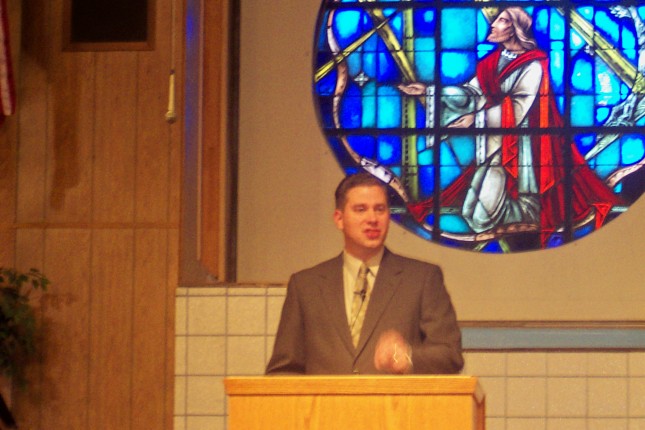 Psalm 138 , a Celebration of Praise, was the focus of our consideration Sunday morning. David's praise was set before us as the example for our own rejoicing. We were encouraged to rejoice with Courageous Praise, reminded of a coming day of Corporate Praise, and emboldened with a Confident Praise knowing God would accomplish His purpose in our lives and ministry.

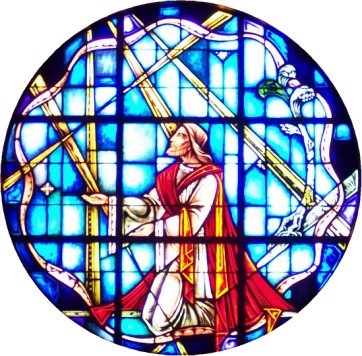 says "I do not pray for these alone, but also for those who will believe in Me through their word." There it is! Jesus was praying for me, as I am one of those who believed as a result of the disciples' words about Jesus Christ.
One reader asked via email about the philosophy of sports. Specifically, “Why are sports important? Is it reasonable to give one’s life to interest in sports?” This is a great question and a timely one at that. For what it is worth, my fantasy football team won this week. But back to the question at hand: why are sports important?
First, a few areas NOT being discussed here. Yes, folks have a variety of interest that may or may not be understood by others. I am not discussing why some are sports fanatics. I also acknowledge that physical exercise IS profitable. I will also give a nod to the fact that many sports metaphors are used in Scripture. Yes, watching competition is enjoyable; and the better a person competes, the better they are to watch. Face it, would you rather watch Tiger Woods drive off the tee, or me? I guess if it had been a while since you had a really good laugh that left your sides aching and your eyes watering, you might choose to see my swing but that is your mean-spirited sadistic nature showing, isn’t it?
 Much will be made this weekend (and has already been made in the days leading up to Monday) of the fifth anniversary of the attacks in New York City, Washington and Pennsylvania. It is important that we remember those 343 members of the NYPD and associated services who bravely lost their lives while attempting to rescue others. It is vital that we not allow ourselves to forget the tremendous breach that was made in our national psyche and sense of security. We ought to give ourselves permission to grieve and remember.
 Polihale State Park, Kauai, Hawaii (above)
 ce was indeed spectacular. It was an amazing reminder to me of the fact that all man can spend a lifetime amassing and achieving, God created in a span of 6 days with mere words! Prayer meeting with our friends on the hill (Summit View Baptist) was encouraging and uplifting as we approached the Throne of Grace together on behalf of one another.
 allas, and (finally) back in San Francisco. It made for a long day; but we made it home with 30 minutes to spare before the calendar turned to Saturday.